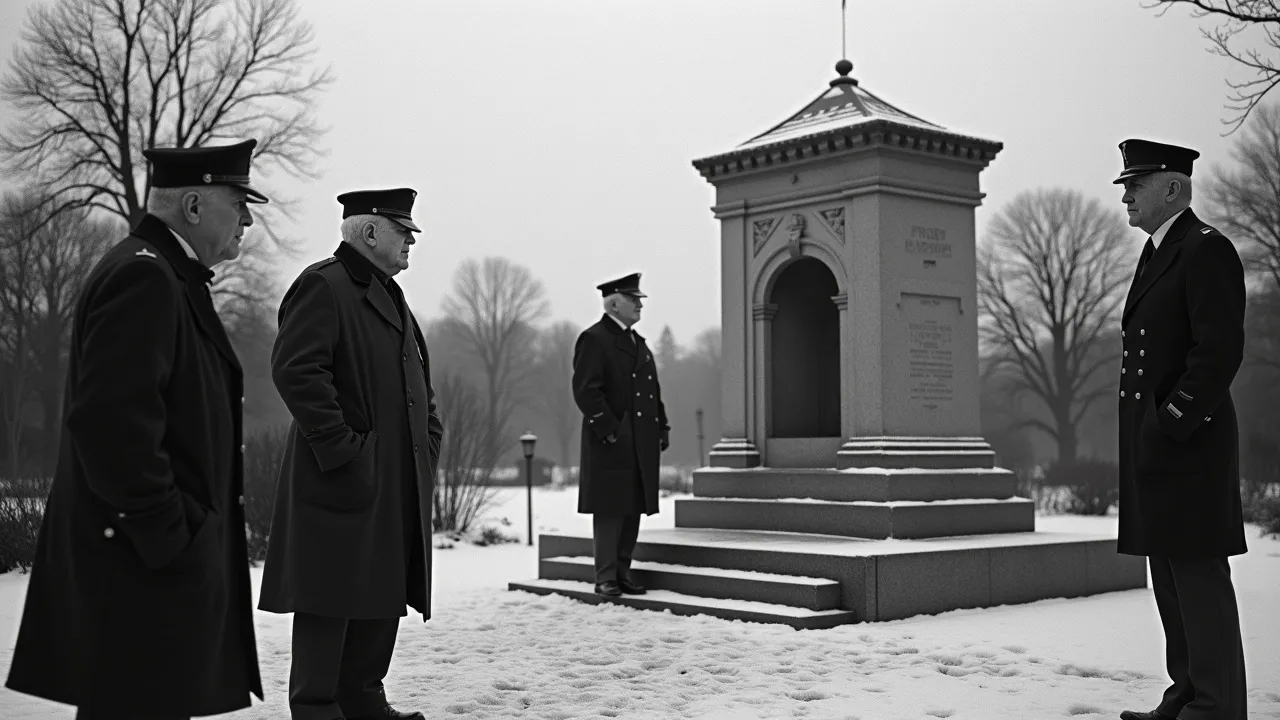
Four Chaplains Day on February 3rd honors four U.S. Army chaplains who gave their lives to save others during the sinking of the SS Dorchester in 1943. The day celebrates their sacrifice and interfaith unity.
The Historical Origins & Evolutionary Journey
Four Chaplains Day commemorates the heroic sacrifice of four Army chaplains who died aboard the SS Dorchester on February 3, 1943. This day has evolved from a wartime tragedy into a lasting symbol of interfaith cooperation and selfless service.
The Foundational Catalyst
On the night of February 3, 1943, the SS Dorchester, a U.S. Army transport ship carrying 902 soldiers, crew, and civilian workers, was torpedoed by a German U-boat off the coast of Newfoundland. As the ship sank, four chaplains—George L. Fox (Methodist), Alexander D. Goode (Jewish), John P. Washington (Roman Catholic), and Clark V. Poling (Reformed)—calmly guided panicking soldiers to lifeboats and distributed life jackets, including their own. They were last seen linking arms and praying together as the ship went down. Their actions saved approximately 230 lives.
The Legislative/Official Adoption
Recognition of their bravery grew over the years. In 1944, the four chaplains were posthumously awarded the Distinguished Service Cross and the Purple Heart. A special Congressional Gold Medal was authorized in 1961 (Public Law 87-267) and presented to their families. President John F. Kennedy signed the law designating February 3rd as an annual observance, though it remains a commemorative day rather than a federal holiday. The Chapel of the Four Chaplains in Philadelphia became a central memorial site, dedicated in 1948.
Modern Global Legacy
Today, Four Chaplains Day is observed at military installations, churches, and schools across the United States and by American communities abroad. The story has been incorporated into interfaith dialogues, military ethics training, and educational curricula. The Four Chaplains Memorial Foundation continues to promote the legacy of selfless service and unity.
How to Celebrate Four Chaplains Day
Four Chaplains Day provides an opportunity to honor interfaith cooperation and heroic sacrifice. Here are actionable ways to observe the day meaningfully:
For Individuals and Families
- Attend or organize an interfaith prayer service at a local church, synagogue, mosque, or community center.
- Read the story of the Four Chaplains to children and discuss the values of courage and selflessness.
- Perform an act of service in your community, such as volunteering at a shelter or donating to a charity that supports veterans.
For Schools and Educational Institutions
- Incorporate a lesson plan on the Four Chaplains into history or social studies classes. Use primary sources like eyewitness accounts.
- Host a poster or essay contest about interfaith unity or heroism.
- Invite a veteran or chaplain to speak about the importance of moral courage.
For Organizations and Military Units
- Hold a remembrance ceremony with a moment of silence at 12:00 AM (the time of the sinking).
- Coordinate interfaith breakfasts or luncheons to foster understanding among different faith groups.
- Donate to the Four Chaplains Memorial Foundation to support education and outreach.
The Interfaith Legacy and Symbolism
The Four Chaplains represent a powerful symbol of religious unity in the face of crisis. They came from different faith traditions—Protestant, Catholic, and Jewish—yet worked together seamlessly to save others. This act has become a touchstone for interfaith movements.
Symbol of Brotherhood
The image of the four chaplains arm-in-arm, praying in different languages, underscores that shared humanity transcends religious divides. Their story is often cited in sermons, speeches, and interfaith dialogues as a model for cooperation.
Impact on Chaplaincy
The tragedy led to improvements in military chaplain training, emphasizing crisis response and the value of interfaith collaboration. Today, chaplains of all faiths serve together in the U.S. military, honoring the legacy of the Four Chaplains.
Global Impact and Commemorations
While Four Chaplains Day is primarily observed in the United States, its message has spread globally. Memorials exist in Canada, where the sinking occurred, and in other nations that value interfaith harmony.
Notable Memorials
- Chapel of the Four Chaplains (Philadelphia, PA) — a dedicated sanctuary with a stained-glass window depicting the chaplains.
- Four Chaplains Memorial (Arlington National Cemetery) — a bronze plaque and tree-lined walk.
- Dorchester Memorial (Newfoundland, Canada) — a monument near the site of the sinking.
International Observances
Canadian veterans' groups often hold ceremonies on February 3rd. In the United Kingdom, the Royal British Legion has recognized the story as a model of service. Interfaith organizations worldwide use the date to promote peace.
Educational Integration and Research
Educators and historians continue to study the Four Chaplains story to explore themes of heroism, faith, and ethical decision-making. Many resources are available for incorporating the event into curricula.
Primary Sources
Eyewitness accounts from survivors, letters from the chaplains, and official naval reports provide authentic material. The National WWII Museum and the U.S. Army Heritage and Education Center offer digitized archives.
Discussion Questions
How do the chaplains' actions align with military codes of conduct?
What role did interfaith cooperation play in their decision-making?
How can modern society apply the lessons of the Four Chaplains to current religious conflicts?
Modern Relevance and Lessons
In an era of increasing religious division, the Four Chaplains story remains profoundly relevant. It demonstrates that individuals from different faiths can unite for a greater good.
Lessons for Today
- Selflessness Over Self-Preservation — The chaplains gave up their own safety to help others, a powerful antidote to today's culture of individualism.
- Interfaith Harmony in Action — Their collaboration models how diverse communities can work together during crises.
- Moral Courage — The chaplains faced a terrifying situation with calm resolve, inspiring others to acts of bravery.
Organizations use the story for leadership training, emphasizing service above self. On Four Chaplains Day, we are reminded that true heroism knows no religious boundaries.
Historical Timeline
SS Dorchester is torpedoed off Newfoundland. Four chaplains give their lives to save soldiers.
Posthumous Distinguished Service Cross and Purple Heart awarded to each chaplain.
Chapel of the Four Chaplains dedicated at Temple University in Philadelphia.
U.S. Congress passes Public Law 87-267, designating February 3rd as Four Chaplains Day.
United States Postal Service issues a stamp honoring the Four Chaplains.
A special Congressional Gold Medal is presented to the families of the Four Chaplains.
70th anniversary commemorations held at the Chapel of the Four Chaplains and in Newfoundland.