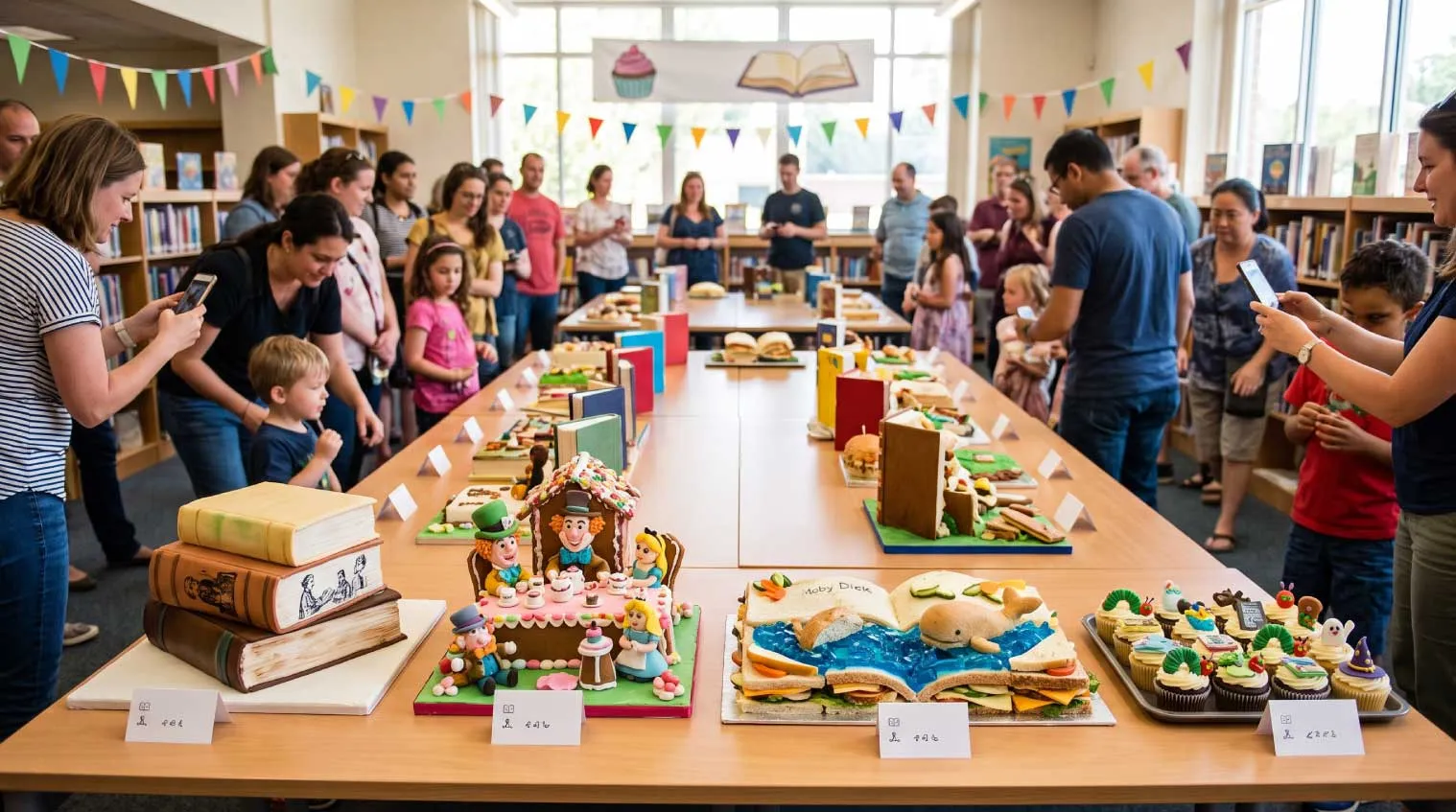
Celebrated annually on April 1st (April Fool's Day), the Edible Book Festival combines a love of reading and food by creating edible artworks inspired by books. Participants craft cakes, cookies, and other treats that look like famous books or puns on titles, then display and eat them together.
The Historical Origins & Evolutionary Journey
The Edible Book Festival is a delightful intersection of literary culture and culinary art, observed annually on April 1st, a date that humorously aligns with April Fool's Day. The event invites participants to create edible interpretations of books—from famous novel covers to pun-filled food titles—and then share them in a communal feast. While its roots are somewhat informal, the festival emerged from grassroots library programming and book arts communities in the early 2000s.
The Foundational Catalyst
The concept likely predates a formal festival; for decades, bakers and book lovers had made book-themed cakes for personal celebrations. However, the first documented public events appeared around 2002–2004. The Internet facilitated the spread of the idea, with library blogs and foodie websites publishing guidelines and photos. The movement gained momentum as a playful counterpoint to the seriousness of literary criticism: what better way to celebrate a book than to eat it?
The Legislative/Official Adoption
The festival has never been officially codified by any government or major institution, but it has been embraced by libraries, schools, museums, and bookstores worldwide. The Book Arts Center of San Francisco and the University of Arizona Poetry Center were early adopters, hosting public events that combined art exhibits with edible installations.
Modern Global Legacy
Today, Edible Book Festival events occur on every continent except Antarctica, often coordinated through social media groups and library networks. The festival has expanded to include categories for kids, thematic puns (e.g., "The Great Gats-brie"—a brie cheese cake), and even video tutorials for remote participants. The core message remains: celebrate the written word in a deliciously tactile way.
How to Celebrate Edible Book Festival
Participating in the Edible Book Festival is simple and adaptable for individuals, families, schools, and organizations. The key is to let creativity and humor guide you. Below are actionable strategies broken down by environment.
Individual Celebrations
Choose a favorite book and design an edible replica of its cover using cake, cookie dough, or fruit. Use icing to write the title and author.
Create a "punny" dish that references a book title, e.g., "Alice in Wonderland" as a Wonder Bread sandwich or "Moby-Dick" as a whale-shaped cupcake.
Host a solo tea party with book-themed treats and post photos on social media using #EdibleBookFestival.
School & Library Events
Organize a contest with categories: Best Design, Best Pun, Most Literally Edible (must be fully consumable).
Provide a base like plain cookies or rice cakes for younger participants to decorate with frosting and candies.
Set up an exhibition table where creations are displayed alongside the books that inspired them, then have a voting session before everyone eats.
Corporate & Social Rituals
Companies with book clubs or innovation teams can run a lunch-hour edible book competition. For example, a marketing team could create an edible version of Influence: The Psychology of Persuasion from cookies and candy bars. The activity breaks down silos and stimulates conversation.
International Variations
United States: Public libraries often host the biggest events, with kids making "bookworm cakes" and adults crafting intricate sugar sculptures.
United Kingdom: Tea shops and literary festivals incorporate edible books into their April 1st programming. Punchy puns like "The Hungry Caterpillar" (caterpillar cake) are popular.
Japan: Edible books often incorporate traditional wagashi (sweet confections) shaped like manga volumes, filled with red bean paste.
France: Baguettes shaped like open books and croissants tinted to look like ancient scrolls are common; events often pair with wine tastings.
The Art of Edible Books: Techniques & Materials
Creating an edible book requires both culinary skill and artistic vision. The medium varies widely: from simple cookie cakes to elaborate marzipan sculptures. Below are common techniques and materials used by enthusiasts.
Foundation Choices
- Cake: Sheet cakes or loaf cakes are easily shaped into book forms. Use fondant to create a smooth cover, then paint with food coloring for illustrations.
- Cookies: Large sugar cookies or gingerbread can be cut into rectangle "pages" and iced with text.
- Rice treats: Rice cereal bars can be molded into book shapes, then decorated with melted chocolate.
Decorative Elements
- Fondant or marzipan for letters and book spines.
- Edible markers for writing titles directly on icing.
- Wafers, licorice, and candy melts for creating raised details like page ridges.
Pun & Concept Examples
Popular puns include: The Great Gats-brie (brie cheese round with a Gatsby hat), Where the Wild Things Are (a cake with animal crackers), and Pride and Prejudice (prejudiced against hunger). The best entries often pair a visual pun with a clever tagline.
Cultural Impact & Community Building
Beyond being a fun activity, the Edible Book Festival serves as a powerful community-building tool. Libraries report increased foot traffic on April 1st, and schools use the event to encourage reluctant readers to talk about their favorite books in a low-pressure setting. The edible aspect adds a sensory layer that makes literary connections more memorable.
Engaging Diverse Audiences
The festival is accessible to all ages and abilities: young children can spread peanut butter on bread to make "The Very Hungry Caterpillar" (a classic), while experienced bakers can create intricate dioramas. Seniors enjoy nostalgic recipes like jello molds shaped as book covers. The shared act of eating the creations fosters a sense of togetherness.
Digital Community
Social media amplifies the festival; each year, thousands of posts use #EdibleBookFestival. Online galleries archive the most creative entries, inspiring newcomers. Some book publishers even encourage fan-made edible covers for new releases, tying marketing to the event.
Nutritional & Food Safety Considerations
While the festival is about fun, organizers must consider allergies, dietary restrictions, and food safety, especially for public events. Below are guidelines to ensure everyone can participate safely.
Allergen Awareness
- Label each creation with its main ingredients: common allergens like nuts, dairy, eggs, and gluten should be clearly listed.
- Provide a separate nut-free zone if possible.
- Offer alternatives: use vegetable-based dyes, gluten-free flour, and vegan butter for inclusive options.
Food Handling
- Creations should be prepared in a clean environment and kept at safe temperatures (cakes with cream cheese icing should be refrigerated until display).
- Display creations on clean, non-porous surfaces. Provide serving utensils so people don't touch shared food.
These practices help the festival remain a positive experience for all.
Future Directions & Sustainability
As the Edible Book Festival grows, organizers are exploring ways to make it more sustainable and digitally inclusive. Some ideas:
- Encourage use of local, seasonal ingredients and minimal packaging.
- Host virtual events where participants share photos and recipes via Zoom, then create their own edible books at home.
- Collaborate with literacy charities: entry fees or donations can fund book purchases for underserved communities.
The festival's lighthearted spirit aligns well with its potential to promote reading, creativity, and community engagement for years to come.
Historical Timeline
First documented Edible Book Festival events are held at the San Francisco Center for the Book and the University of Arizona Poetry Center, featuring book-shaped cakes and pun-inspired dishes.
The festival gains international attention through a widely shared blog post titled 'Eat Your Words: The Edible Book Festival is Here.' Social media begins to amplify the movement.
Public libraries in Canada and Australia adopt the festival as an annual April Fools' program, creating free, family-friendly events that combine art and literature.
The first 'Virtual Edible Book Festival' is organized on Instagram, with participants from over 20 countries sharing photos under #EdibleBookFestival.
A national library association in the United States includes Edible Book Festival guidelines in its programming toolkit, boosting adoption in small-town libraries.
During the pandemic, many events move online, with templates for edible book projects shared as PDFs. YouTube tutorials for simple cookie cakes become popular.
The festival sees its largest turnout yet, with over 500 official events registered on a community-maintained website. Prizes are offered for 'Most Literarily Accurate' and 'Best Use of Fondant'.